2026-11-22 ·
Switching to Propane in Rural Georgia: What Your Range and Dryer Need
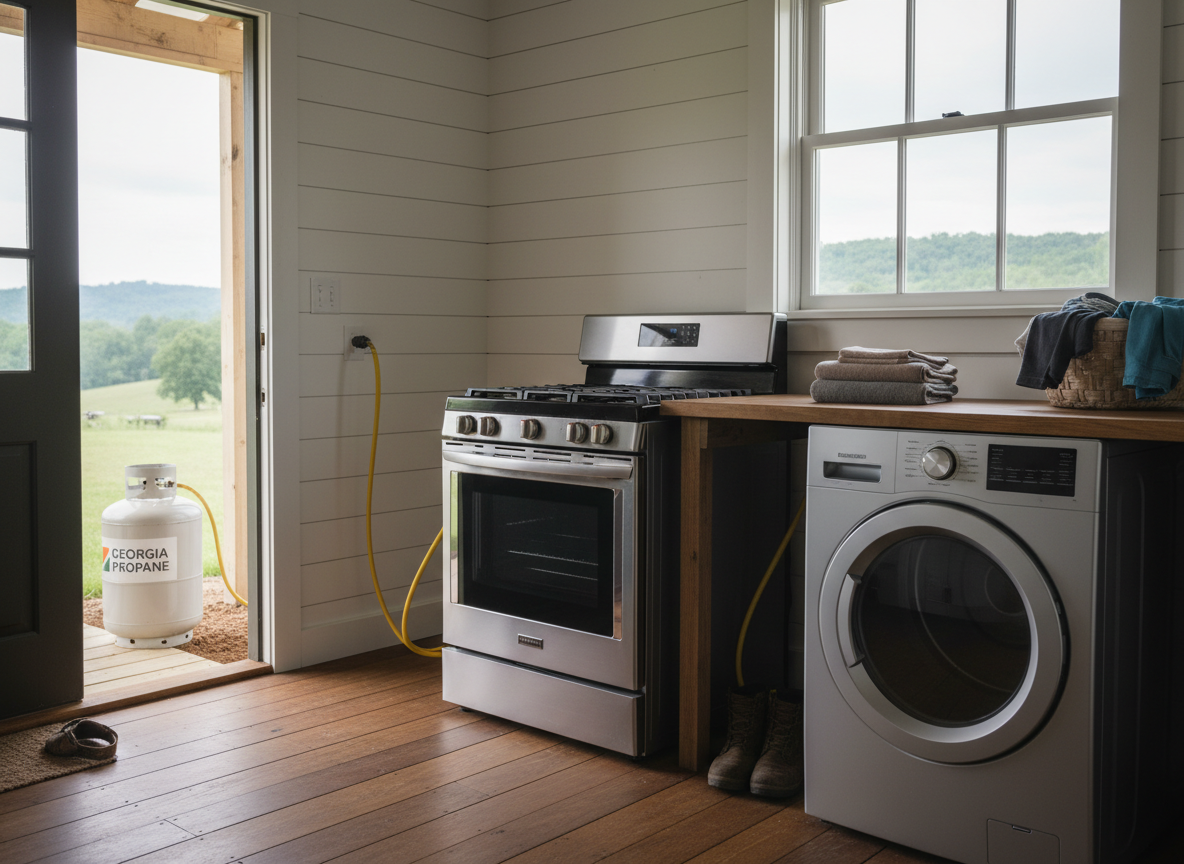
Switching to propane for a range and dryer in rural Georgia starts with verifying that both appliances accept propane conversion kits, installing 1/2-inch gas supply lines rated for the load, confirming 120-volt outlets or 4-prong 240-volt receptacles, and running 4-inch rigid vent pipe limited to 25 linear feet with no more than two 90-degree elbows.
Measuring Your Space and Fuel Requirements
Homeowners begin by measuring the distance from the propane tank regulator to the appliance locations, ensuring the line maintains at least 1/2-inch diameter throughout to deliver adequate BTU flow for both a range and dryer. Propane conversion requires swapping orifices and adjusting regulators on the appliances themselves, a step handled during Propane Conversion Kit Installation. Rural properties often place tanks 30 to 50 feet from the house, so installers calculate pressure drop across that run before final connections. Measure the existing gas stub-out height, typically 3 to 6 inches above the floor behind the range and 4 inches behind the dryer, to confirm new appliances will align without additional elbows. Note any elevation changes between tank and appliances, because propane regulators must sit level and within 10 feet of the tank in most setups. These measurements guide the independent local installer on pipe sizing and regulator placement before any work begins.
Outlet Types and Electrical Needs
Older rural homes frequently retain 3-prong range outlets that must be upgraded to 4-prong 240-volt receptacles to meet current codes for electric ignition systems on propane ranges. Dryers require either a 120-volt grounded outlet for gas models or a 4-prong 240-volt outlet if switching from electric. Measure the distance from the nearest grounded circuit to the appliance locations, keeping runs under 50 feet to avoid voltage drop. Gas Range Installation covers matching the outlet type and verifying the circuit breaker rating, usually 15 or 20 amps for ignition and controls. In exurban homes with propane, confirm the range and dryer share no circuit with high-draw equipment such as well pumps. Independent local installers test outlet polarity and ground integrity before final hookup to prevent ignition failures common in humid conditions.
Venting for Dryers in Humid Georgia Conditions
Georgia's humid summers trap moisture inside dryer vents, so rigid 4-inch metal pipe must slope slightly downward toward the exterior and terminate with a hooded vent at least 12 inches above grade. Limit total vent length to 25 feet including two 90-degree elbows; longer runs require a booster fan. Dryer Vent Installation addresses lint buildup that accelerates in humid air, recommending smooth-wall pipe over flexible sections. Route the vent through an exterior wall rather than the roof to reduce condensation points. In basement laundry areas common in older rural homes, add a condensate drain at the lowest point of the vent run. Humid Georgia Summers and Your Dryer Vent: Installing It Right explains how proper termination prevents mold growth inside walls during muggy months.
What a Proper Hookup Includes
A correct propane hookup begins with leak-testing the new 1/2-inch line using soapy water, then connecting the range with a 3-foot or 5-foot approved gas connector rated for 60,000 BTU or higher. The dryer receives its own dedicated connector sized for 30,000 BTU, secured with stainless clamps and checked for movement. Gas Dryer Hookup covers installing a sediment trap and shutoff valve within 6 feet of each appliance. Installers also secure the dryer vent with foil tape at every joint and confirm the range sits level so the propane orifices function correctly. Electrical connections are made only after gas lines pass pressure tests, and both appliances receive a final operational check with propane flowing.
Warning Signs of a Bad Install
Yellow or orange flames instead of blue on the range burners indicate improper air shutter adjustment or low propane pressure from an undersized line. Soot around the dryer exhaust or a persistent gas odor after the installer leaves signals loose fittings or an incomplete leak test. Excessive lint blowing back into the laundry room points to a crushed or overlong vent run exceeding 25 feet. Appliances that fail to ignite on the first or second try often trace to mismatched outlet polarity or a missing ground. Any of these issues requires immediate shutdown of the gas supply and a return visit from the independent local installer.