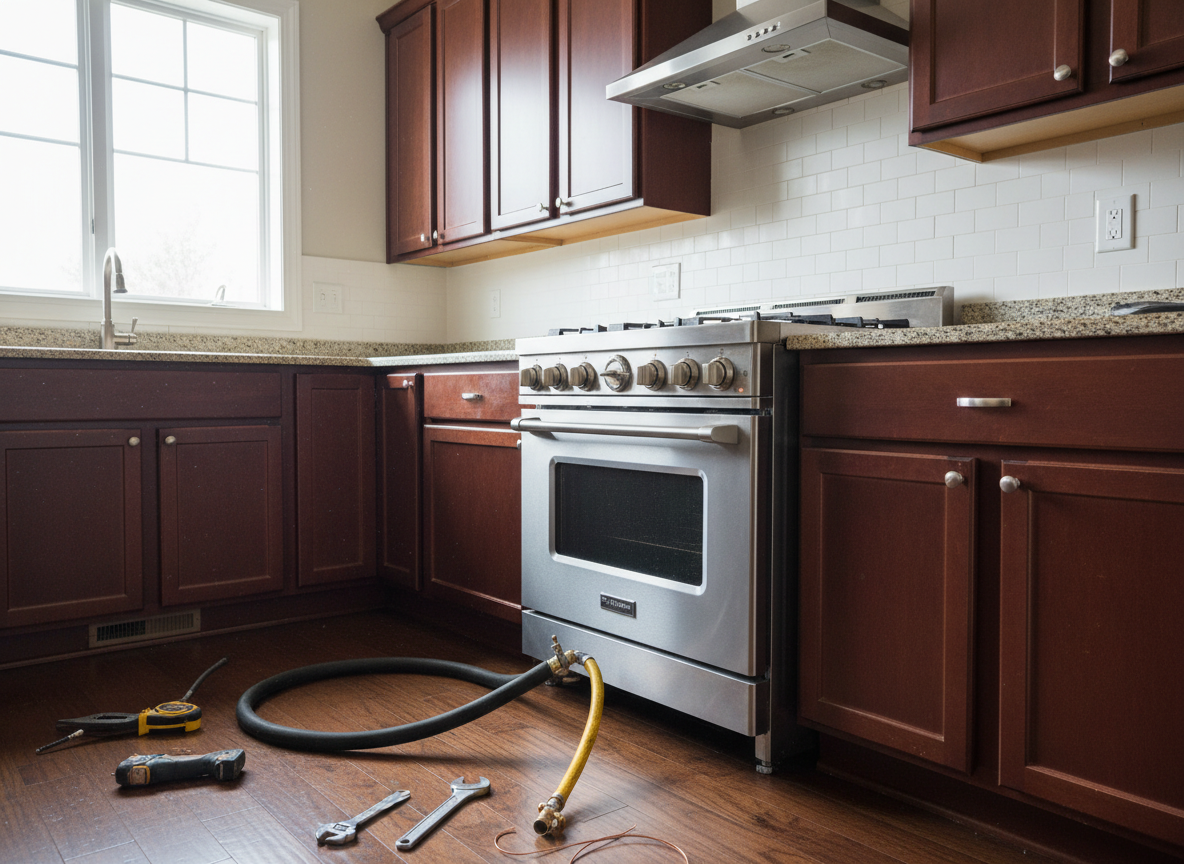
Gas range installation in metro Atlanta often involves homes in neighborhoods like Virginia-Highland or Grant Park where older properties may have existing gas stubs that require careful inspection before any new connections. An independent local installer shuts off the gas supply, installs a fresh flexible connector with gas-rated thread sealant, mounts an anti-tip bracket, and performs a leak test on every joint. Burner adjustment follows to ensure proper flame height, and ranges arriving set for natural gas may need a propane conversion kit when placed in rural or exurban properties outside the city core.
New subdivisions around Sandy Springs and kitchen remodels in East Atlanta frequently call for precise leveling so the range sits flush against cabinetry while maintaining required clearances. Installers also verify that the anti-tip device is secured to the floor or wall and test all burners after hookup. In humid summers the focus stays on clean, dry connections to prevent moisture-related issues around the gas line over time.
Many Fulton County townhomes governed by HOAs feature stackable or slide-in models that still require the same gas safety steps even when space is tight. The installer confirms the regulator setting matches the fuel type and replaces any brittle or reused connectors rather than attempting to salvage old parts. This approach aligns with local conditions where mild winters keep gas lines in steady use without extreme temperature swings.
Homeowners in areas near the Atlanta BeltLine or Piedmont Park often request gas range work during remodels that include updated ventilation paths to the exterior. The process always includes a final burner calibration and joint-by-joint leak check before the installer leaves the site.
Technician insight
In Atlanta, the thing that catches most people out with Gas Range Installation is older intown homes in places like Inman Park or the Old Fourth Ward where the existing gas stub often sits behind built-in cabinetry that must be partially removed before a new connector can be attached safely.
Gas Range Installation Services We Offer
✓Natural Gas Range Hookup
An independent local installer connects the range to an existing natural gas stub using a new flexible connector and performs a full leak test on every joint.
✓Propane Conversion Kit Installation
The installer swaps orifices and adjusts the regulator for propane use in exurban homes, then tests flame quality to avoid yellow tips or soot buildup.
✓Anti-Tip Bracket Mounting
A bracket is secured to the floor or wall behind the range so the appliance cannot tip forward when the oven door is opened or heavy items are placed on the door.
✓Burner Flame Adjustment
Each burner is lit and adjusted for a steady blue flame that matches the manufacturer specification after the gas connection is complete.
✓Flexible Gas Connector Replacement
Old connectors are removed and replaced with new gas-rated lines that are never reused, followed by thread sealant and pressure testing.
✓Gas Joint Leak Testing
Every threaded connection receives a soap solution or electronic leak detector check to confirm no gas escapes before the range is placed into service.
How it works
- 1
Call
Contact Premier Appliance Solutions to request a referral for gas range installation.
- 2
Connect With An Independent Local Installer
You are matched with an independent local installer who serves your Atlanta neighborhood or nearby city.
- 3
Discuss Hookups And Price With The Installer
Review the specific gas line condition, propane needs if any, and required parts directly with the installer.
- 4
Install And Test
The installer completes the hookup, mounts safety brackets, adjusts burners, and leak-tests every joint.
Pricing
Pricing depends on the appliance, the hookups and any parts, and is discussed with the installer after you call (702) 935-3936.