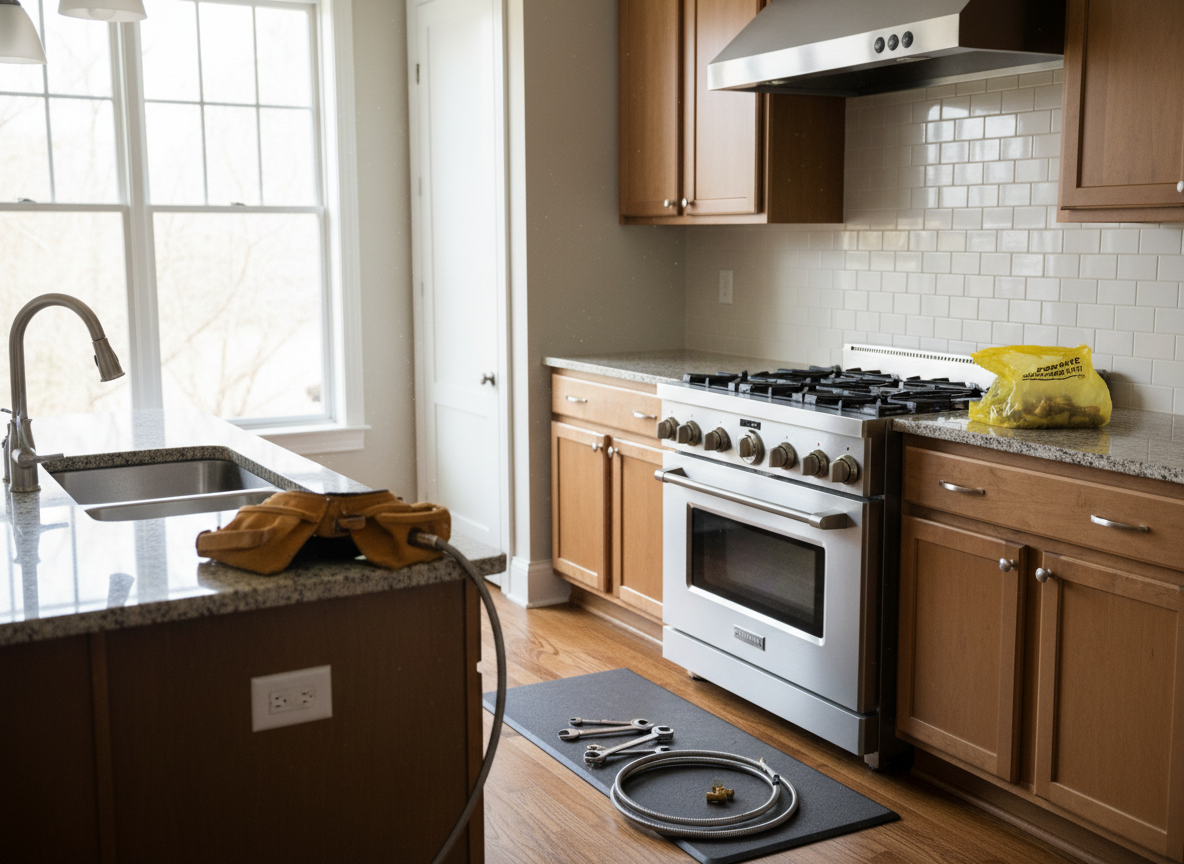
Metro Atlanta properties range from older intown homes in Virginia-Highland and Inman Park with existing natural gas stubs to new-build subdivisions in Fulton County that rely on propane tanks. When a range or dryer arrives set for natural gas, the orifices, regulator and flame settings must be changed to prevent tall yellow flames, soot buildup and carbon monoxide. Independent local installers handle the swap using the manufacturer's LP kit, replace the flexible connector and perform a full leak test on every joint.
Humid summers increase the importance of correct combustion because moisture already stresses indoor air quality in basements and garage laundry rooms. Rural and exurban homes outside the perimeter often keep propane on site for whole-house systems, so conversion work also appears during kitchen remodels where homeowners switch from electric to gas cooking. The installer confirms the cutout dimensions, levels the unit and verifies that the anti-tip bracket remains secure after the gas adjustment.
Stackable units in HOA townhomes around Sandy Springs and Buckhead require extra clearance checks behind the appliances for the shorter vent runs and the new gas connection. Installers bring the correct thread sealant rated for gas and never reuse the old connector. After the changeover they test each burner or heating element to confirm steady blue flames and proper ignition.
Refrigerant recovery rules and haul-away requirements stay separate from the gas work, but the same referral call can coordinate both when an older range is being replaced. The process stays focused on matching the kit to the exact model so the appliance operates safely on the local fuel supply.
Technician insight
In Atlanta the thing that catches most people out with Propane Conversion Kit Installation is older intown homes in places like Grant Park and the Old Fourth Ward that still have 3-prong outlets and natural gas lines while new subdivisions outside the perimeter run on propane tanks; skipping the regulator reset always shows up as yellow flames once the first humid summer hits.
Propane Conversion Kit Installation Services We Offer
✓Range Propane Conversion
Independent local installers swap natural gas orifices for the LP set from the manufacturer's kit and adjust the regulator for safe propane operation on residential ranges.
✓Gas Dryer Propane Conversion
Installers replace the dryer orifices, reset the regulator and confirm the new flexible connector and 120-volt outlet work correctly with propane in Atlanta homes.
✓Cooktop LP Kit Installation
Drop-in and slide-in cooktops receive the propane orifice change plus flame adjustment so every burner lights cleanly on LP supplied to metro Atlanta kitchens.
✓Wall Oven Propane Adjustment
Single and double wall ovens are converted using the kit orifices and regulator setting, then tested for even heating on propane in older Fulton County homes.
✓Burner Orifice Replacement
Installers fit the correct LP orifices on ranges and cooktops, seal each connection and verify flame height to avoid soot in humid Atlanta summers.
How it works
- 1
Call
Contact Premier Appliance Solutions to request a propane conversion referral for your Atlanta-area appliance.
- 2
Connect with an independent local installer
We match you with an independent local installer who handles propane conversion work in your neighborhood.
- 3
Discuss hookups and price with the installer
Review the appliance model, existing gas stub and any needed parts directly with the installer.
- 4
Install and test
The installer performs the orifice swap, regulator adjustment, leak test and burner verification on site.
Pricing
Pricing depends on the appliance, the hookups and any parts, and is discussed with the installer after you call (702) 935-3936.