2026-11-25 ·
Getting Ready for a New Gas Range: A Georgia Homeowner's Checklist
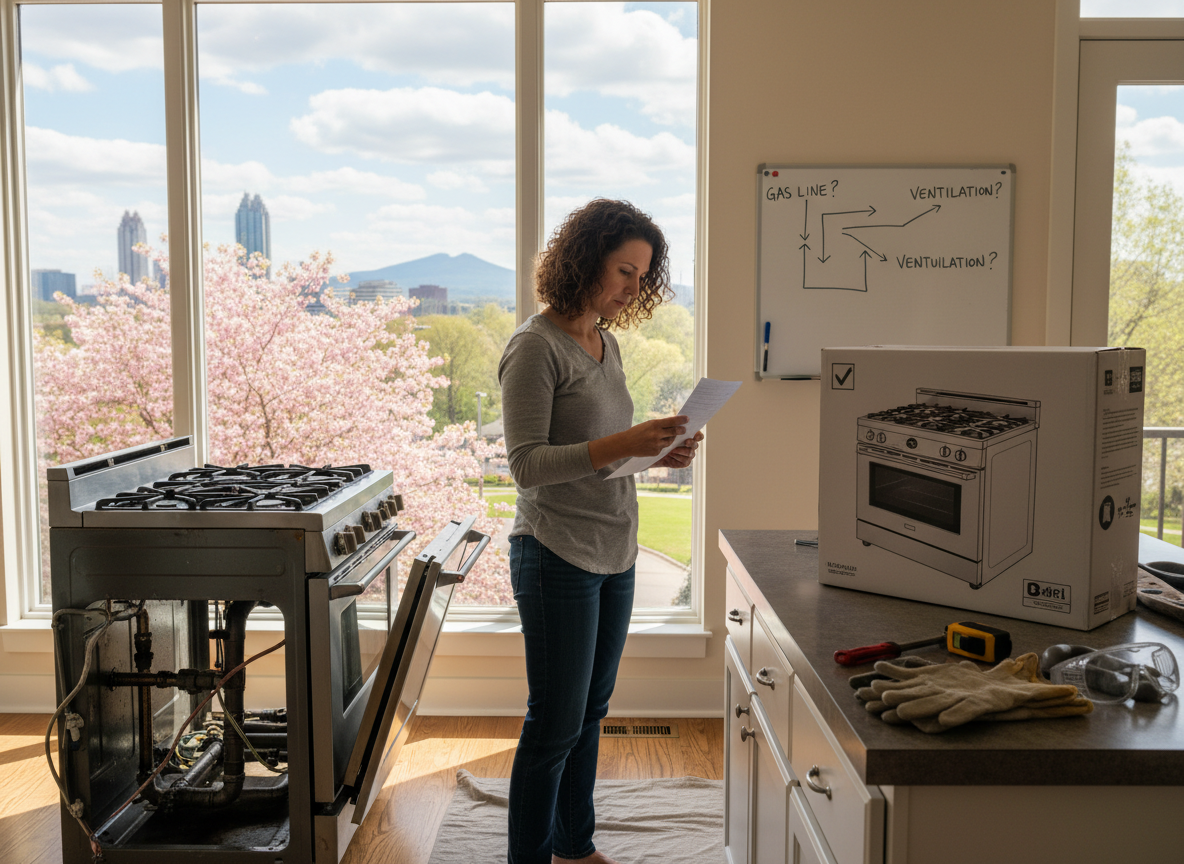
Georgia homeowners installing a new gas range begin by confirming the appliance fits the existing opening and that gas supply plus a 120V outlet are already present. Standard models measure 30 inches wide and require at least 24 inches of depth plus side clearances of 1 inch. Checking these details early prevents delays once the unit arrives from the retailer.
Measuring Your Kitchen Space
Confirm the cabinet opening width at 30 inches and depth from wall to counter edge at a minimum of 24 inches for most slide-in models. Measure the height from floor to countertop at 36 inches to ensure the range top sits level. Account for any existing backsplash or trim that reduces clearance. Note the location of the gas shutoff valve behind the current appliance and verify it is within 3 feet of the new unit. Walk through Midtown and Buckhead kitchens shows many older homes have non-standard openings that require minor cabinet adjustments before delivery. Document these measurements with photos to share with the referral service.
Determining Fuel Type and Line Readiness
Most Atlanta-area homes use natural gas, but rural properties outside the perimeter often rely on propane tanks. Verify the existing line size matches the range manufacturer requirement, typically 1/2-inch pipe. In neighborhoods such as Virginia-Highland and Inman Park, many homes retain original gas stub-outs from earlier remodels. If the home uses propane, schedule a line inspection before the appliance is ordered. An independent local installer can confirm pressure and leak-test the connection on arrival. Review the related guide on switching to propane in rural Georgia homes for additional line details.
Assessing Electrical Outlets and Needs
Gas ranges require a dedicated 120V grounded outlet within 6 feet of the unit for electronic ignition and controls. Older East Atlanta and Grant Park homes frequently have ungrounded 3-prong receptacles that must be updated to 3-prong grounded or GFCI-protected outlets. Confirm the circuit is 15 or 20 amps and not shared with other kitchen appliances. Avoid extension cords, as they create fire hazards and violate code. An independent local installer will test voltage and polarity during hookup to ensure the range functions safely.
Planning for Proper Ventilation
Maintain at least 30 inches of clearance above the cooktop to any combustible cabinet and 6 inches to side walls unless protected by a range hood. In humid Georgia summers, ensure the range hood exhausts outdoors rather than recirculating moisture-laden air. Check that existing ductwork in basement or garage laundry areas remains clear of lint buildup. Proper venting protects cabinet finishes and maintains indoor air quality during frequent cooking. Link to the humid Georgia summers and dryer vent guide for related moisture-control practices that also apply to range exhaust.
Understanding the Hookup Process
A correct gas range installation includes shutting off the gas supply, connecting the new flexible gas line with proper flare fittings, and leak-testing all joints with soapy water. The installer secures the anti-tip bracket to the floor or wall and levels the appliance front to back. Electrical connection follows, then the range is tested for burner ignition and oven operation. In HOA townhomes with stackable laundry nearby, installers also verify that shared utility walls allow safe access. The full process appears on the gas range installation page.
Identifying Red Flags After Installation
Watch for hissing sounds at connections, yellow burner flames instead of blue, or error codes on the display after power-up. A loose anti-tip bracket or range that rocks when the oven door opens indicates incomplete leveling. Any gas odor persisting after the installer leaves requires immediate shutoff and re-inspection. These signs point to issues that an independent local installer must correct before daily use.
Knowing When Professional Help Is Essential
Contact the referral service if measurements reveal a non-standard opening, the gas line ends in the wrong location, or the home lacks a grounded 120V outlet. Older intown properties in Old Fourth Ward or West End often need outlet upgrades or line extensions before a new range can be placed. An independent local installer handles these preparations safely and ensures compliance with local requirements.