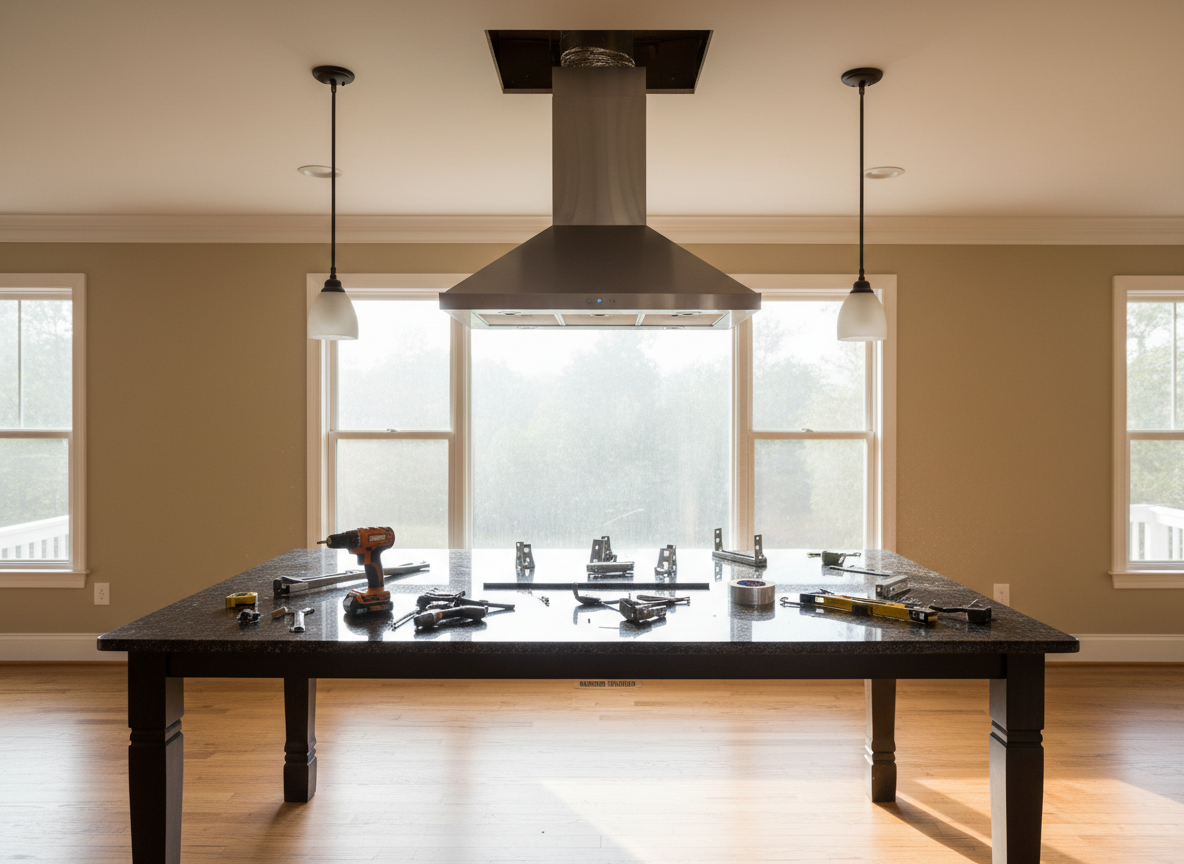
Range hood installation begins with confirming the unit matches the cooktop width and type. An independent local installer mounts the hood at the height listed in the manufacturer instructions, then runs ductwork of the correct diameter straight to an exterior termination. In metro Atlanta new-build subdivisions this often means planning the route through attic spaces before drywall closes, while older homes in neighborhoods like Inman Park or Grant Park may require adapting to existing chases or masonry.
Ducted systems pull air outside through rigid metal pipe with sealed joints, avoiding the flexible foil that restricts flow and collects grease. Recirculating models used in some Fulton County townhomes rely on charcoal filters that need periodic replacement to control odors and moisture during humid summers. Island and wall-chimney styles common in Buckhead kitchens demand extra attention to ceiling joists and clearance above the cooking surface.
Proper ventilation removes heat, steam, and cooking byproducts that otherwise linger in tightly sealed newer construction. Installers check that the exterior vent hood has a functional damper and sits clear of obstructions such as the Atlanta BeltLine trail embankments or dense landscaping around East Atlanta properties. Every connection is tested for airflow before the job finishes.
Homeowners in areas like Sandy Springs or Decatur often request hoods that integrate with custom cabinetry or panel-ready finishes. The installer verifies electrical requirements and ensures the unit does not interfere with nearby appliances or windows in compact galley kitchens typical of older intown stock.
Technician insight
In Atlanta the thing that catches most people out with Range Hood Installation is routing duct through the low-pitch roofs and tight attic spaces common in Virginia-Highland and Old Fourth Ward bungalows; a single extra elbow can drop airflow enough that the hood never performs as rated.
Range Hood Installation Services We Offer
✓Under-Cabinet Range Hood Installation
Installer mounts the hood beneath existing cabinets, aligns it with the cooktop, and connects rigid ducting to an exterior wall or roof termination.
✓Wall Chimney Range Hood Installation
The unit is secured to the wall at the specified height with duct routed through cabinetry or soffits to maintain proper exhaust flow.
✓Island Range Hood Installation
Ceiling-mounted island hoods receive support framing and straight duct runs that exit through the roof while preserving clearance above the cooktop.
✓Ducted Range Hood Installation
Rigid metal duct of the correct diameter is run from the hood to an outside termination with sealed joints and a damper-equipped vent cap.
✓Recirculating Range Hood Installation
When exterior venting is not feasible, the installer fits charcoal filters and confirms the unit recirculates air back into the kitchen.
✓Range Hood Duct Extension
Existing short duct runs are lengthened with matching diameter pipe to reach a suitable exterior outlet while preserving airflow capacity.
How it works
- 1
Call
Call to request a referral for range hood installation.
- 2
Connect
You are connected with an independent local installer who serves your neighborhood.
- 3
Discuss
Discuss hookups and price with the installer after you call.
- 4
Install and Test
The installer completes the mounting, duct connection, and airflow test.
Pricing
Pricing depends on the appliance, the hookups and any parts, and is discussed with the installer after you call (702) 935-3936.